

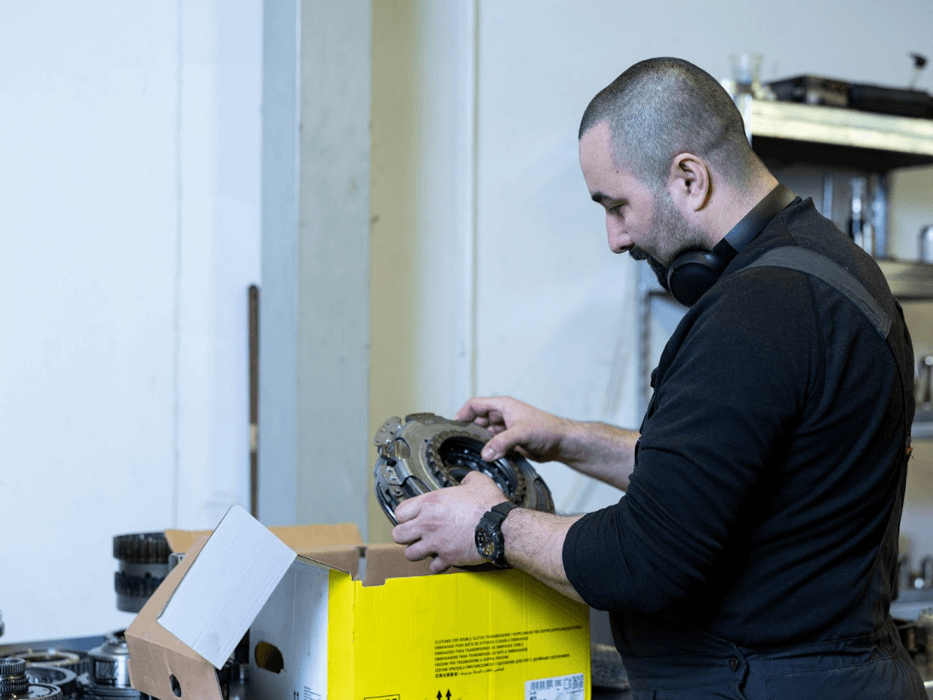
The DSG 7 dry clutch gearbox (DQ200) is appreciated for its fast changes and efficiency in traffic, but it comes with a series of components sensitive to wear
If you have noticed jerks when changing gears, vibrations or transmission errors in the dashboard, it is possible that one of the parts of this box has failed.
Below, we present the 3 best-selling parts for DSG 7, why they fail, what symptoms appear and when it is the right time to replace them.
Automatic transmissions of the DSG 7 type with dry clutch (code DQ200) are very popular on models of the Volkswagen group (VW, Audi, Skoda, Seat). The combination of efficiency, fast gear changes and fuel economy makes them attractive to a wide range of drivers.
However, like any complex system, the DSG 7 also has sensitive points. Certain components are consumables or can fail more quickly depending on driving style, traffic conditions and preventive maintenance. In this article, we analyze the 3 best-selling parts for the DSG 7 and clearly explain why they fail and when it is time to replace them.
🔗 See product: Clutch Kit DSG 7 – cod 602000700
The clutch is undoubtedly one of the most demanding components in a dual-clutch gearbox. In the DSG 7, it operates in a dry environment, and has less good cooling than oil-filled ones. They overheat quite quickly in urban driving conditions or during frequent sporty starts.
The double dry clutch transfers the engine torque to the wheels and allows gear changes without interruption of traction. The two clutch discs that make up the assembly are subject to wear over time. The lifespan of a double dry clutch is approximately 200,000 km, in mixed use conditions (urban, extra-urban). If the car is used predominantly in urban areas, the lifespan decreases considerably.
Failure of the DSG 7 clutch kit may have the following specific symptoms:
The service life of the clutch kit for the DSG 7 (DQ200) gearbox varies significantly depending on driving style, traffic conditions and maintenance performed.
The clutch can be used without problems for 200,000 km, but in case of intensive use (frequent quick starts, daily urban traffic, towing, etc.) it may require replacement at 50,000 or 60,000 km.
🔗 View product: Damper DSG – cod 415054509
After the clutch, the dual-mass flywheel is the next part that bears significant mechanical stress in the DSG 7 transmission.
The flywheel on the DSG 7 is designed to stabilize engine speed and reduce shocks transmitted to the transmission.
Although it is a robust component, the flywheel can wear out over time, especially if the clutch is loose or the engine transmits excessive vibrations to the transmission.
A worn flywheel can negatively affect both driving comfort and the durability of the new clutch.
Ideally, along with the clutch. If there are suspicious noises or vibrations, preventive replacement is recommended to protect the rest of the transmission.
The cost of a flywheel is approximately 500 euros.

🔗 See product: Mechatronic Hydraulic Unit 0AM – cod 0AM325025DXZ00 HID
While the clutch and flywheel are the “visible” parts, it’s the hydraulic unit that does all the work in the background. It’s the component that converts electronic commands into mechanical actions through hydraulic pressure – and when it fails, the symptoms can be dramatic.
This unit is an integral part of the mechatronics and contains solenoid valves, channels and valves that actuate the clutches and gears. It operates based on signals received from the TCM computer and uses oil pressure to engage the clutches and move the forks.
| Error code | Code explanation |
| (VW 06079) P17BF | Malfunction in the hydraulic pump |
| (VAG 006079/10902/10903) P17BF | |
| (VW 06300) P189C | Limited performance due to insufficient pressure rise; Play protection (unjust field activation/deactivation) |
| (VAG 006300) P189C | |
| P1895 | Limitation of performance due to pressure drop |
When the above defects are present in the DSG 7 gearbox, it is necessary to replace the hydraulic unit in the mechatronics.
At Automatico, this component is also available as a separate part, without changing the entire mechatronics.
The approximate cost of a hydraulic unit is 1,000 Euros including VAT. The warranty offered is 2 years.
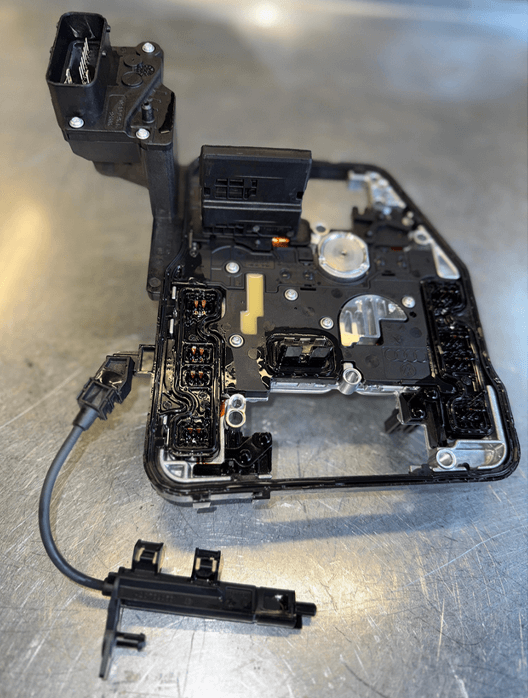
If the hydraulic unit is the “muscle” of the transmission, the computer is the “brain.” The TCM can function perfectly for years, but even the smallest logic error can render it unusable, locking the entire transmission into failsafe mode.
The TCM manages gear changes based on data received from sensors and driver commands. It communicates with the car’s ECU and adapts the transmission’s behavior to road conditions.
When the fault is confirmed by diagnosis and recalibration or reprogramming no longer works. The TCM can be replaced separately from the rest of the mechatronic unit.
The approximate cost for a TCM is approximately 600 euros including VAT.
DSG 7 is a dry clutch gearbox, but there is also oil here, the oil being like in a manual gearbox with the role of lubricating the pinions, bearings, synchronizers.
The oil and filter prevent premature wear of internal components and remove impurities. Contaminated oil can lead to seized solenoid valves or loss of hydraulic pressure.
For this type of gearbox, we recommend changing it every 200,000 km or during repairs as necessary.
The DSG 7 transmission offers remarkable performance, but it comes with the need for proper maintenance and timely interventions.
The above-mentioned: clutch, flywheel, hydraulic unit, computer and oil with filter – are the key points in the operation of the transmission.
Monitoring symptoms, correct diagnosis and replacement of worn parts can make the difference between a quick repair and a complete overhaul of the box. Our recommendation is simple: pay attention to the signals and visit us for early detection!
Automatic Services

Spare parts

 TOP
TOP